Project Overview
Valet Market San Diego served as a flagship capital project for Accel Robotics, pushing the boundaries of autonomous, frictionless retail. In this high-tech environment, specialized physical hardware must interface perfectly with AI-driven sensing systems to track inventory in real-time.
As a Lead Systems Engineer, I was responsible for the end-to-end development of the specialized shelving hardware, ensuring rigorous adherence to thermal requirements and durability standards while maintaining a seamless aesthetic.
Technical Contributions
- Smart-Shelf Arrays: Engineered multi-modal shelving units using 4 high-precision weight sensors per shelf, achieving a detection accuracy of **+/- 3mm**.
- Pusher Mechanisms: Designed custom "pusher" assemblies that provided physical staging for products while acting as a mechanical trigger for AI camera activation.
- Hybrid Detection: Integrated weight-sensing and computer vision arrays (Weight + Vision) to verify item removal and replacement with high confidence.
- Thermal Management: Managed hardware specification for refrigeration and freezer units to ensure component longevity under continuous thermal load.
Visual & Media Documentation
KPBS News Feature: Overview of the autonomous tech deployment.
KPBS Public Media (2022, Feb 9). External Link
KPBS Public Media (2022, Feb 9). External Link
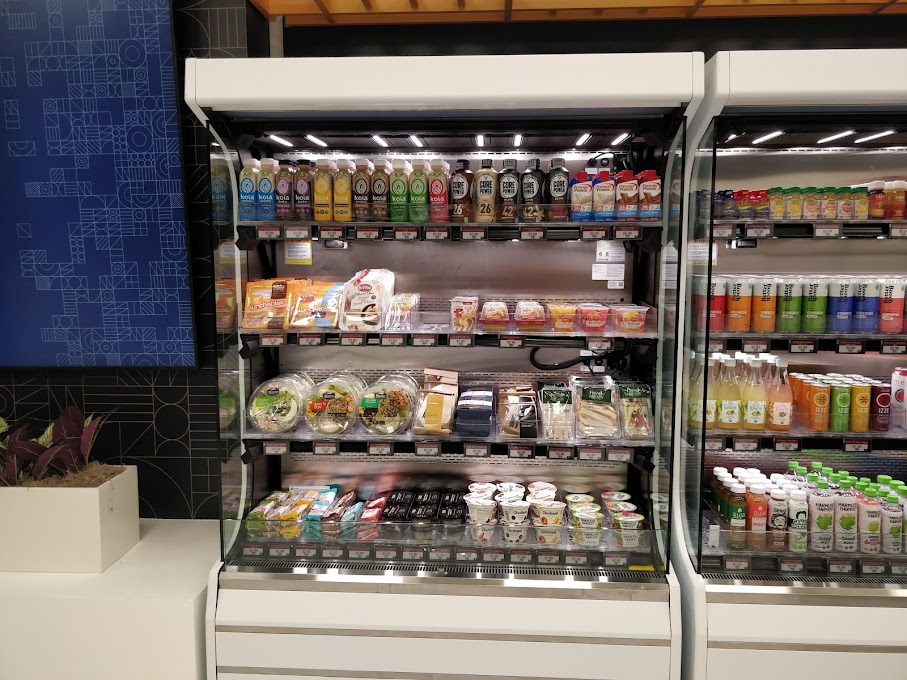
Merchandising Hardware: Integration of "pusher" mechanisms into open-air refrigeration units to assist camera-triggering logic.
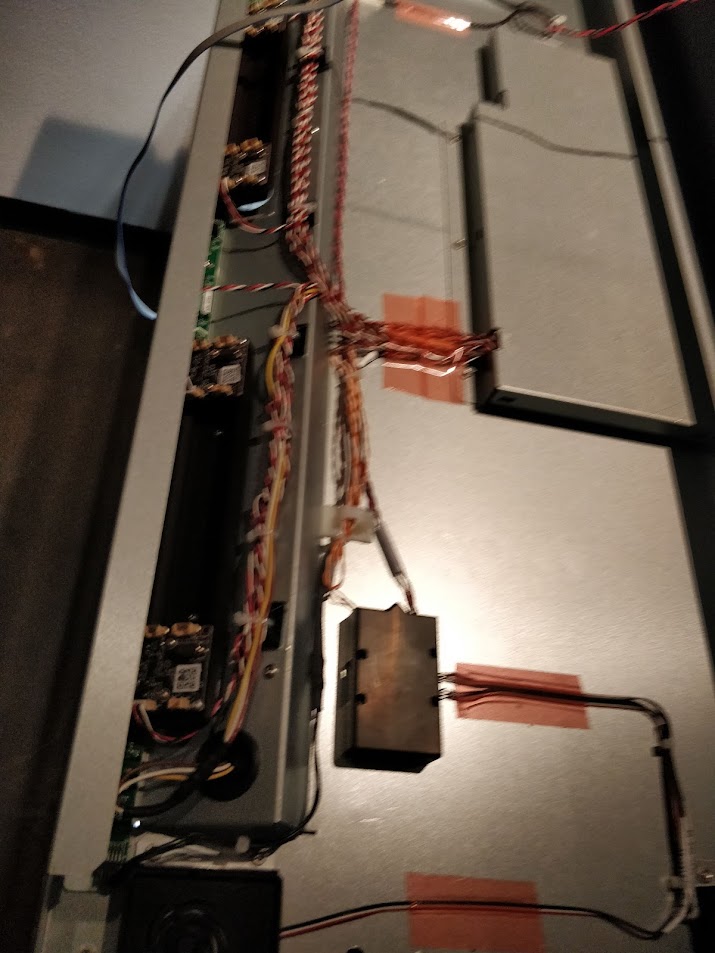
Precision Sensing: Interior view of the "Smart Shelf" load-cell array used to detect product movement within +/-3mm.
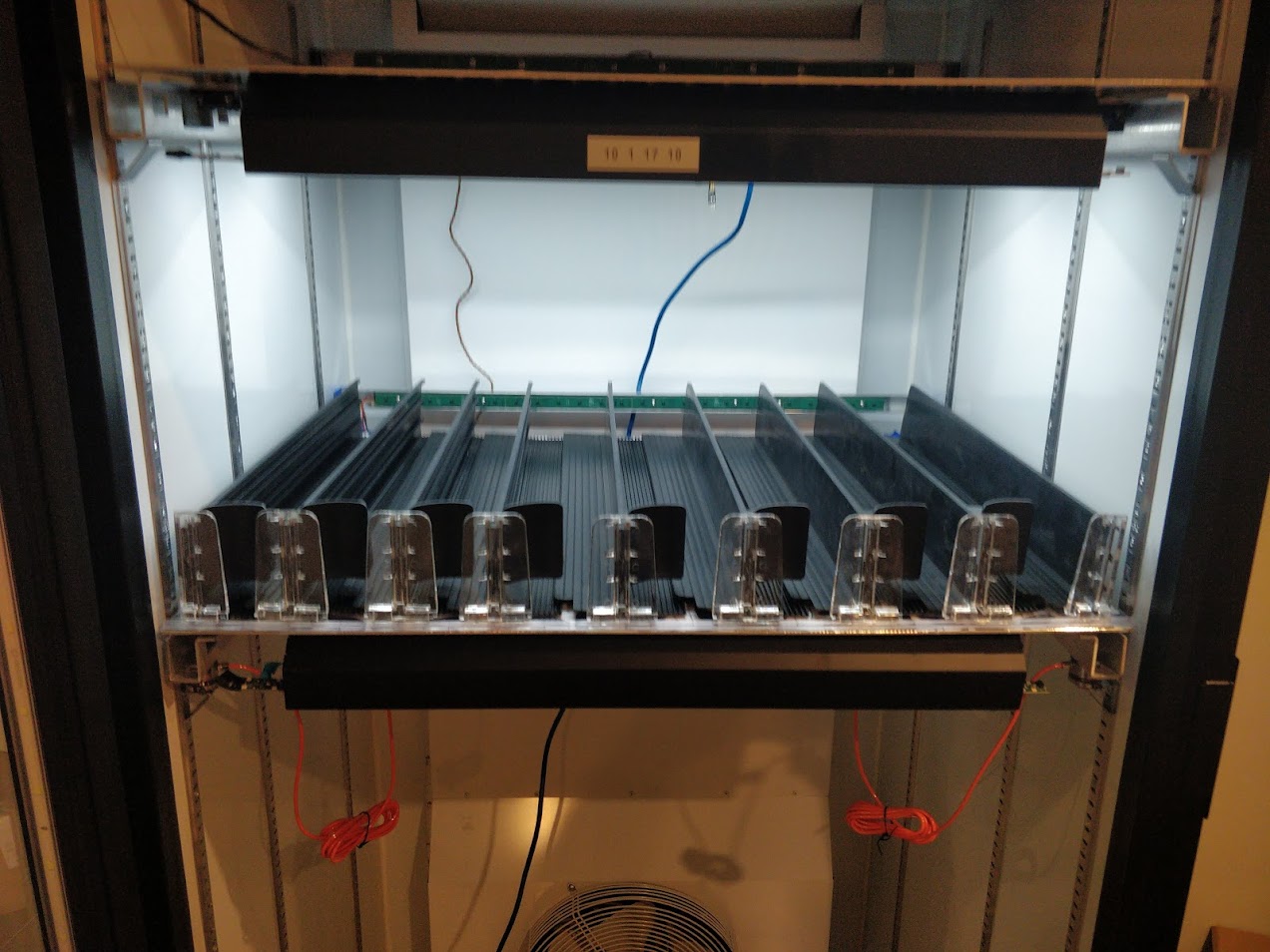
Production Validation: Test shelf showcasing the integration of vision boxes (front) and sensor bars (back) for hybrid validation.